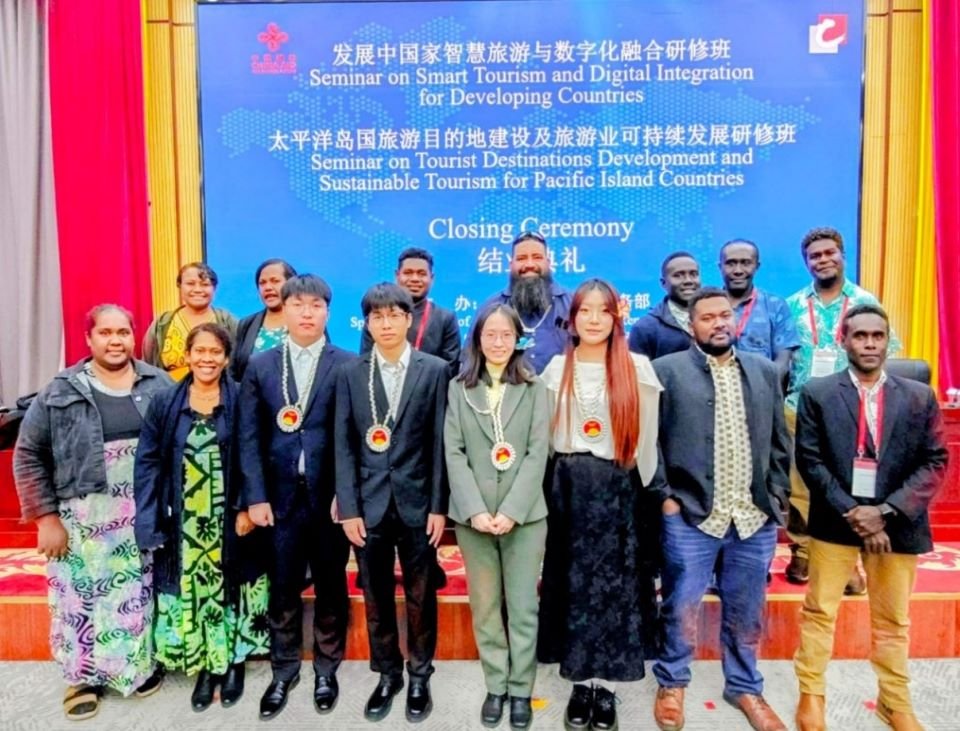
Strengthening the Capacity of Tourism Sector Through a sustainable tourism development training in China
A delegation from Solomon Islands, comprising representatives from the Ministry of Culture & Tourism, Provincial Governments, and private-sector tourism operators, has successfully completed an intensive two-week training seminar on Tourism Destination Development and Sustainable Tourism for Pacific Island Countries, held from 23 October to 4 November 2026 in Beijing, in the People’s Republic of China.
The delegation included; senior tourism officers from the Ministry of Culture and Tourism, Laurie Leketo and Tobias Sandakabatu, provincial tourism officers Meria Paza from Western Province, Carlmarx Qoso from Choiseul and Sonia Fiumae from Malaita provinces.
Solomon Airlines was represented by Garedd Porowai, while Wendy Kealau and Rajina Willie Mona represented SICCI.
Tourism operators who accompanied the delegation included; Amanda Riniu, owner of Parangiju Mountain Lodge in Guadalcanal, Cedric Takilmwa William of Easternder Travel Group (SI) Limited in Temotu and Steven Manu Misiosi of Haodaikirio Home Stay in Malaita province.
The two-week program was not only an intensive learning experience but also an opportunity for cultural exchange, international exposure, and personal enrichment.
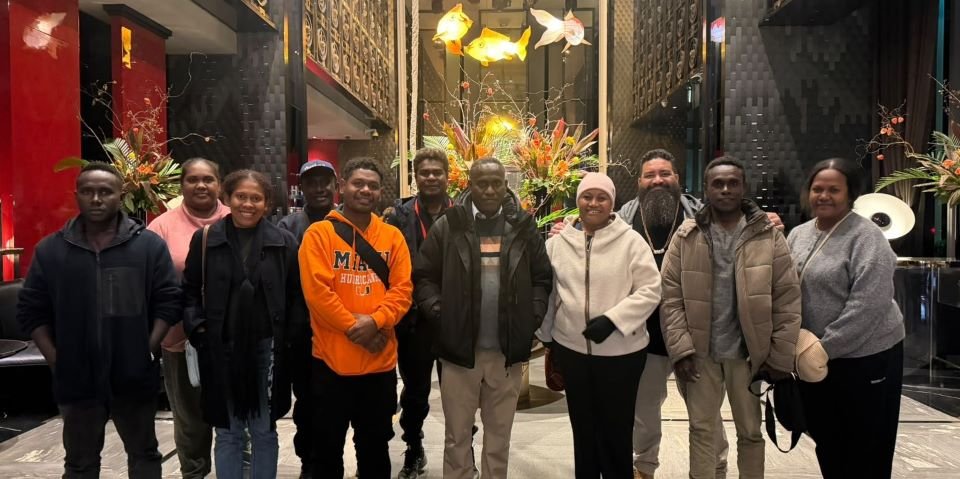
As part of the programme, participants visited several notable tourism destinations and attractions, including the tropical city of Sanya, Wuzhizhou Island, and Yanoda Rainforest, gaining first-hand insights into China’s tourism development, destination management, and nature-based tourism experiences.
Beyond the formal training, participants also had the opportunity to experience some of China’s most iconic cultural and historical landmarks, including climbing the world-renowned Great Wall of China and walking through the historic grounds of the Temple of Heaven in Beijing.
For many participants, these experiences represented the fulfilment of lifelong aspirations and provided a deeper appreciation of China’s rich cultural heritage and history.
Despite differences in political systems, cultural backgrounds, and development approaches between China and the Pacific Island countries, participants found common ground in the shared importance of sustainable development, environmental protection, cultural preservation, and the responsible management of tourism resources for future generations.
The experience reinforced the understanding that, regardless of national differences, sustainable tourism remains a common global priority requiring cooperation, shared knowledge, and collective commitment.
The training program was facilitated by the Ministry of Commerce of the People’s Republic of China, through the Central Academy of Culture and Tourism Administration in Beijing.
It provided a valuable platform for knowledge exchange, professional development, and international cooperation aimed at strengthening sustainable tourism development across Pacific Island countries.
The seminar provided participants with an opportunity to broaden their understanding of China’s tourism development strategies and approaches, particularly in destination planning and management, tourism product development, environmental conservation, community-based tourism, and the implementation of sustainable tourism practices.
A significant strength of the programme was the participation of representatives from both government institutions and the private tourism sector. The inclusion of provincial government representatives and tourism operators provided an important opportunity to bridge government policy and planning with practical industry experience.
It also encouraged meaningful dialogue, collaboration, and a shared understanding of the opportunities and challenges facing the tourism industry.
Throughout the two-week programme, participants engaged in technical presentations, interactive discussions, practical learning sessions, study visits, and cultural exchanges.
These engagements provided first-hand exposure to China’s tourism development models and demonstrated how strategic planning, effective destination management, private-sector participation, and community engagement can contribute to a competitive, resilient, and sustainable tourism industry.
For Solomon Islands, the knowledge and experiences gained from this training are particularly relevant, given the country’s unique tourism assets, including its rich marine biodiversity, diverse cultural heritage, pristine natural environments, and significant potential for community-based, cultural, and eco-tourism development.
The programme also provided an opportunity for the delegation to reflect on how relevant lessons, experiences, and good practices from China could be adapted to the Solomon Islands context, taking into consideration the country’s geographical characteristics, provincial diversity, customary land ownership, community involvement in tourism development, and the need for inclusive and environmentally responsible tourism practices.
The Ministry of Culture & Tourism recognises that achieving sustainable tourism development requires a coordinated, whole-of-sector approach, supported by strong partnerships between the national government, provincial governments, tourism operators, local communities, and development partners.
In this regard, the participation of private-sector tourism operators in the program was particularly valuable, recognising their critical role in translating tourism policies and strategies into practical outcomes at destination and community levels.
The Ministry wishes to express its sincere appreciation and gratitude to the government of the People’s Republic of China, through its Ministry of Commerce, the Central Academy of Culture and Tourism Administration, and all programme organisers, facilitators, trainers, and host institutions for their generosity, hospitality, and continued commitment to strengthening tourism capacity and cooperation with Pacific Island countries.
The Ministry also acknowledges the importance of continuing such capacity-building initiatives in the future. It is hoped that similar training opportunities will be made available to a wider range of tourism stakeholders, including Provincial Government tourism authorities, community-based tourism operators, private-sector businesses, and other industry representatives.
Broadening participation will help ensure that the knowledge and benefits gained from these international training programmes are shared more widely across the country’s tourism industry.
The Ministry remains committed to strengthening a resilient, inclusive, competitive, and sustainable tourism industry that generates meaningful economic and social benefits for the people of Solomon Islands, while protecting and preserving the country’s natural and cultural heritage for present and future generations.
Source: MCT Press